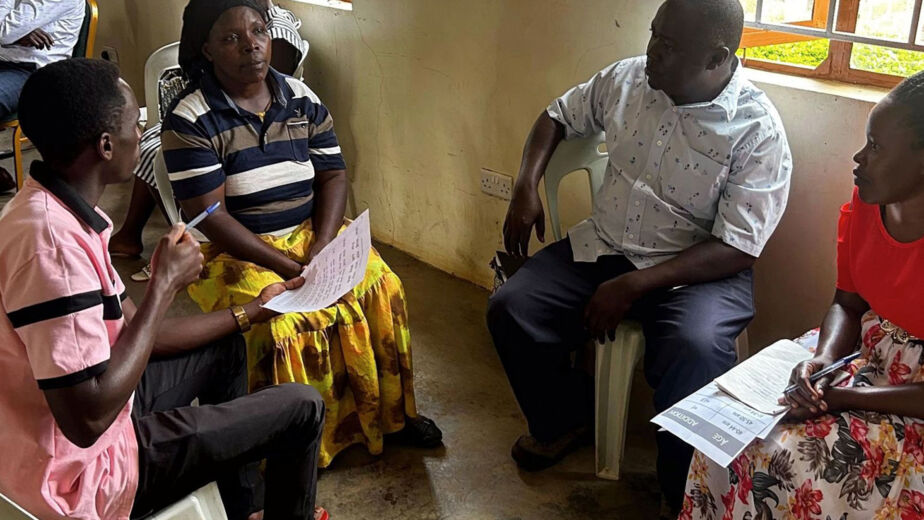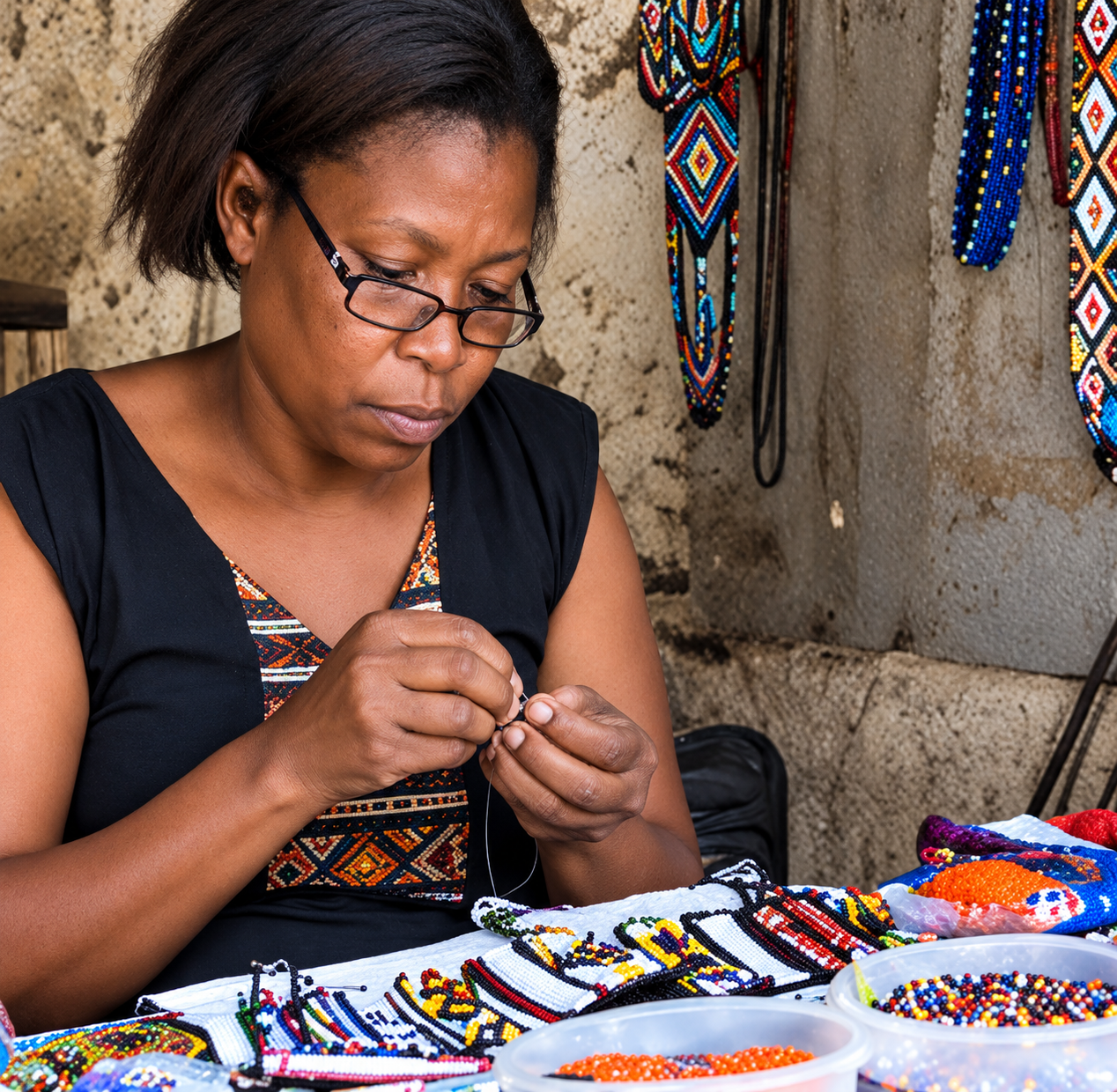
For a Congolese refugee mother in Rubaga Division, Kampala, clear vision was directly connected to her ability to earn. When a community health worker from Santé Initiative Uganda met Amina at her small bead-jewellery workstation, she was unsure whether her eye problem was serious enough to seek help. Like many people in underserved communities, she had learned to keep going despite headaches, eye strain and a slowing pace of work. Amina, a refugee from the Democratic Republic of Congo, supports her children by making and selling handmade bead jewellery. After losing her husband during conflict, she became the sole provider for her family. As her vision declined, Amina worked more slowly, made more mistakes and often had to stop because of eye strain and headaches.
What Her Work Requires
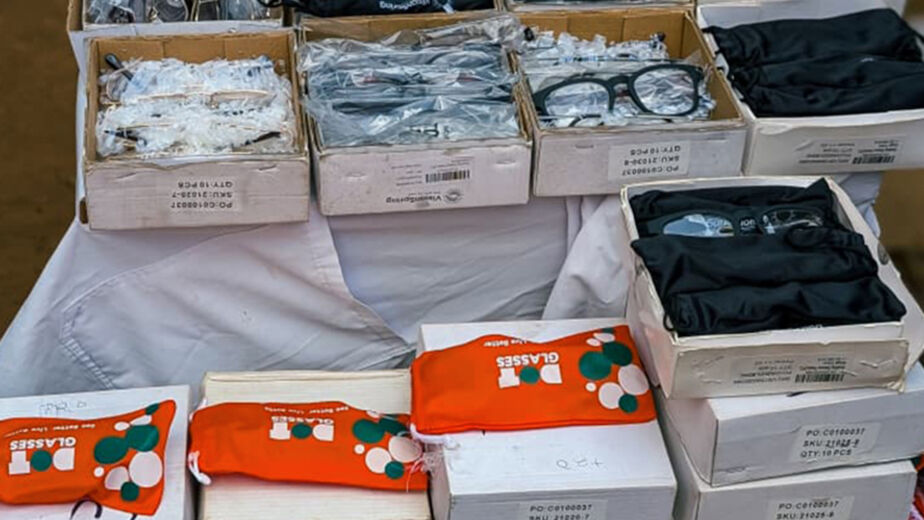
Threading tiny beads, matching colours, tying knots and finishing each piece neatly detailed close-up work that paid rent, bought food and kept her children in school. Through Santé Initiative Uganda’s door-to-door and work-based screening approach, a simple vision assessment found a correctable near-vision problem. She was fitted with affordable reading glasses and shown how to use and care for them. The change was immediate. With clear vision restored, Amina could see the beads properly again, finish orders with confidence and continue earning for her family.
I had learned to keep going despite the headaches, but now I can see the beads properly again. I can finish my orders with confidence and continue earning for my family.
Amina
One Story, A Wider Quarter of Impact
Amina’s experience reflects a broader community eye health effort across Kampala and Lwengo districts. The outreach numbers tell a story of significant reach: 1,084 people were screened, 332 people were identified with eye-related impairments, and 257 pairs of eyeglasses were distributed. Additionally, 51 complicated eye cases were referred for specialist care, 45 Village Health Team members were trained, 16 partner organisations were engaged, and 36 eye health cases were followed up after referral. These services reached refugee and host communities, schools, workplaces and community gathering points. Activities were conducted in line with infection prevention and control guidance during Ebola preparedness efforts; community health workers also received IPC training for safe outreach and household engagement.

From One-Time Outreach to a Continuous Eye Health Pathway
The next step is to ensure each person reached is connected to the care, referral and follow-up they need. Santé Initiative Uganda continues to meet people with long-standing eye health concerns, untreated vision problems and questions about conditions they have lived with quietly for months or years. Communities still need advanced eye care treatment, affordable corrective lenses, follow-up care, routine screening, referral and navigation support, and health education and prevention. Their practical next step is to train Village Health Team Champions to support early identification, health education, referral and follow-up within their communities. They will continue scaling community outreaches, door-to-door screening and work-based eye health services while using referral tracking and follow-up to keep people connected to care.
Amina’s restored vision shows what this pathway means in practical terms: a mother able to work, earn and care for her children because she received a simple, affordable pair of glasses. Community-based eye care can be life-changing when it reaches people before preventable vision loss disrupts their lives.